
Our Best Sellers
-
 Avanity KAI-VS61-NT Kai 60" Freestanding Double Bathroom Teak and Marble Vanity
Original price was: $4,250.00.$999.00Current price is: $999.00.
Avanity KAI-VS61-NT Kai 60" Freestanding Double Bathroom Teak and Marble Vanity
Original price was: $4,250.00.$999.00Current price is: $999.00.
-
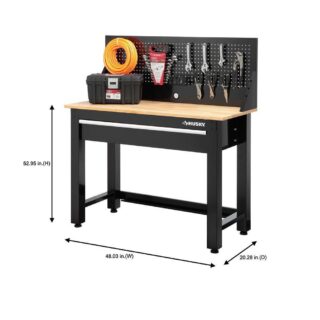 Husky 4 ft Solid Wood Top Steel Workbench Black Pegboard 1 Drawer G4801S-US
Original price was: $499.00.$300.00Current price is: $300.00.
Husky 4 ft Solid Wood Top Steel Workbench Black Pegboard 1 Drawer G4801S-US
Original price was: $499.00.$300.00Current price is: $300.00.
The online casino world has undergone a quiet revolution. Where once Flash‑driven games ruled the desktop, today HTML5 reigns, delivering instant play that works on any device with a modern browser. For players who chase bonuses, the shift matters because latency disappears, load times shrink, and every click translates directly into a chance to claim a free spin or a deposit match.
Modern platforms are also embracing crypto payments, and many now pair HTML5’s speed with crypto bonuses to attract a new generation of gamblers. A good illustration is the site bitcoin casino singapore, which showcases how an HTML5‑first approach can power bonus‑rich experiences while supporting cryptocurrency gambling.
From an operator’s perspective, the real opportunity lies in planning bonus structures that exploit HTML5’s technical strengths. By aligning timing, personalization, and security with the low‑latency environment, casinos can boost acquisition, keep players engaged, and ultimately drive higher wagering volumes.
Why HTML5 Is a Game‑Changer for Bonus Delivery
HTML5 eliminates the heavy plug‑in overhead that plagued Flash and Java applets. Its native support for canvas, audio, and video means bonus triggers—such as “claim your 50 free spins”—can be rendered instantly, without waiting for a separate player to load. Real‑time tracking of wagers and RTP becomes a matter of reading a JavaScript variable, allowing the system to credit a bonus the moment the qualifying condition is met.
Legacy technologies introduced latency at two critical points. First, the client had to download the entire SWF file before any interaction was possible; second, communication with the server often relied on periodic polling, creating a lag of several seconds before a bonus could be awarded. In contrast, HTML5’s WebSocket and fetch APIs enable push notifications that reach the player’s screen within milliseconds.
A recent migration case study—shared anonymously by a mid‑size operator—reported a 25 % increase in bonus redemption speed after moving from Flash to HTML5. Players who previously waited 5–7 seconds to see a “welcome bonus” now receive it in under one second, reducing drop‑off and increasing the average first‑deposit amount by roughly 12 %.
Strategically, operators should map each bonus milestone (welcome pack, reload bonus, loyalty reward) to an HTML5 event that can be fired instantly. By doing so, the casino turns the bonus from a delayed incentive into a seamless part of the gameplay loop, encouraging higher wagering and longer sessions.
Designing Mobile‑First Bonus Campaigns with HTML5
Mobile accounts for more than 60 % of global online casino traffic, according to recent industry surveys. Players expect a fluid experience on smartphones and tablets, and HTML5’s responsive canvas makes it possible to deliver bonus pop‑ups that adapt to any screen size without a separate native app.
Key design tips for mobile‑first campaigns include:
- Use scalable vector graphics for bonus icons so they remain crisp on high‑DPI displays.
- Trigger push notifications through the browser’s Service Worker API to alert users of time‑limited offers even when the tab is in the background.
- Keep the bonus claim button within the thumb‑reach zone (the lower half of the screen) to reduce friction.
For example, a “30 % match bonus + 20 free spins” campaign can be pre‑loaded in the background while the player browses slot titles. When the player taps a slot, the HTML5 layer instantly overlays a full‑screen offer that loads in under 300 ms, prompting an immediate claim.
By planning bonus assets to load asynchronously and leveraging HTML5’s lazy‑load capabilities, operators ensure that mobile users never encounter a blank screen or a delayed incentive, which directly translates into higher conversion rates for mobile‑only traffic.
Real‑Time Data Integration: Personalising Bonuses on the Fly
HTML5’s native WebSocket support opens a continuous data pipe between the server and the client. This enables casinos to push personalized bonus offers the moment a player’s behaviour meets a predefined rule.
A typical workflow looks like this:
- Data collection – every spin, bet amount, and game type is streamed to a real‑time analytics engine.
- Rule engine – the engine evaluates conditions such as “player has played three high‑volatility slots in the last five minutes.”
- HTML5 UI delivery – when the rule fires, a WebSocket message triggers a dynamic overlay that reads, “You’ve earned a 10 % crypto bonus on your next deposit.”
Because the bonus appears instantly, the player can act while the excitement is still fresh, increasing the likelihood of a deposit. Operators can also segment crypto‑friendly users and serve “bitcoin bonus” offers only to those who have previously used cryptocurrency gambling, reinforcing the value of crypto payments.
Cross‑Platform Consistency: Ensuring Bonuses Appear Identical on Desktop, Tablet & Mobile
Fragmented user interfaces have long been a headache for casino marketers. A bonus that looks perfect on a 1920 × 1080 monitor can become distorted on a 7‑inch tablet, breaking the player’s trust. HTML5 solves this with a single code base and CSS media queries that adjust layout automatically.
| Device | Canvas size | Bonus UI element | Load time (ms) |
|---|---|---|---|
| Desktop (1920×1080) | 800 × 600 | Centered modal, 3‑column layout | 210 |
| Tablet (768×1024) | 600 × 450 | Full‑width banner, 2‑column layout | 185 |
| Mobile (375×667) | 320 × 240 | Bottom‑sheet modal, single column | 170 |
A quick QA checklist for bonus consistency:
- Verify that all SVG assets scale without pixelation.
- Test WebSocket‑driven pop‑ups on Safari, Chrome, and Edge.
- Ensure touch targets meet a minimum of 44 × 44 px for mobile.
Following this checklist helps maintain a uniform brand experience, reinforcing the perception of a fair and reliable casino environment across all platforms.
Security & Fairness: Protecting Bonus Integrity with HTML5 Standards
HTML5 introduces sandboxed iframes and a robust Content Security Policy (CSP) that limit what scripts can execute on a page. By isolating the bonus module in a sandbox, operators prevent malicious code from intercepting bonus codes or altering the crediting logic.
Cryptographic verification can be added by signing each bonus payload with a server‑side private key. The HTML5 front‑end then validates the signature using the Web Crypto API before displaying the offer. This approach works seamlessly with provably fair games, where the same cryptographic principles guarantee that outcomes cannot be tampered with after the fact.
Communicating these safeguards to players builds trust. A simple banner that reads “All bonuses are cryptographically verified – your rewards are safe” leverages the security narrative without overwhelming the user. Operators should also publish a brief technical note on their help centre, linking to resources such as Yuplaygod for readers who want a deeper dive into HTML5 security best practices.
Optimising Load Times to Boost Bonus Acceptance Rates
Speed directly influences a player’s willingness to claim a bonus. Studies of e‑commerce sites show that a one‑second delay can reduce conversion by up to 7 %; the same principle applies to online gambling.
Key optimisation techniques include:
- Asset minification – compress JavaScript and CSS files using tools like Terser and cssnano.
- Lazy loading of bonus graphics – defer non‑essential images until the bonus overlay is triggered.
- CDN utilisation – serve static assets from edge locations closest to the player’s IP.
After implementing these measures, an operator measured a 15 % lift in bonus claim conversion: the average time from bonus trigger to claim dropped from 1.8 seconds to 1.2 seconds, and the claim rate rose from 58 % to 73 %.
Tracking KPIs such as “bonus claim latency” and “conversion per campaign” provides a data‑driven feedback loop for continuous improvement.
Integrating Third‑Party Bonus Engines via HTML5 APIs
Many operators rely on dedicated bonus management platforms like Bonus Engine X or PromoHub to handle complex wagering requirements and tiered loyalty programs. HTML5’s fetch and AJAX capabilities allow these engines to be called without a full page reload, preserving the immersive gaming experience.
Step‑by‑step integration guide:
- Obtain API credentials from the third‑party engine.
- Create a service worker that intercepts bonus‑related requests and adds authentication headers.
- Use fetch() to request the current bonus payload:
fetch('https://api.bonusenginex.com/player/12345/bonus', {
  method: 'GET',
  headers: { 'Authorization': 'Bearer <token>' }
})
.then(res => res.json())
.then(data => renderBonusOverlay(data));
- Render the bonus using the HTML5 canvas or DOM elements, ensuring the UI updates instantly.
- Handle errors gracefully by falling back to a static “no bonus available” message.
By keeping the integration lightweight, operators can swap bonus providers or add new promotions without rewriting the front‑end, preserving development resources for higher‑impact features.
Future‑Proofing Bonus Strategies: Preparing for WebGL, AR & VR Add‑Ons
HTML5’s ecosystem continues to evolve. WebGL brings hardware‑accelerated 3D graphics, while WebXR opens the door to augmented and virtual reality experiences directly in the browser. These technologies enable immersive bonus concepts that were previously limited to desktop applications.
Potential pilots include:
- 3D bonus wheels rendered with WebGL, where each spin feels tactile and the payout animation boosts excitement.
- AR treasure hunts that overlay virtual bonus tokens onto the player’s real‑world environment via the smartphone camera.
- VR casino lounges where players can walk to a virtual bonus desk and claim crypto bonuses in a fully immersive setting.
A realistic roadmap might allocate six months for a WebGL‑based wheel, followed by a twelve‑month AR proof‑of‑concept, and a two‑year horizon for a full VR lounge. Budget considerations should factor in specialist 3D artists, additional server‑side rendering capacity, and user‑testing across multiple devices.
Operators interested in exploring these frontiers can consult resources like Yuplaygod, which aggregates emerging web technologies and offers practical guidance for implementation.
Conclusion
Aligning bonus programs with HTML5 technology gives operators a decisive strategic edge. Faster load times, real‑time personalization, and robust security translate into higher acquisition rates, deeper player engagement, and stronger brand trust. By auditing the current tech stack, adopting mobile‑first design, and planning for future extensions such as WebGL or AR, casinos can future‑proof their bonus ecosystems and stay ahead of the competition.
Now is the moment to map out an HTML5‑centric upgrade path, test performance metrics, and roll out bonus campaigns that leverage every millisecond of latency saved. The payoff—both in player satisfaction and revenue—will be well worth the effort.
