
Our Best Sellers
-
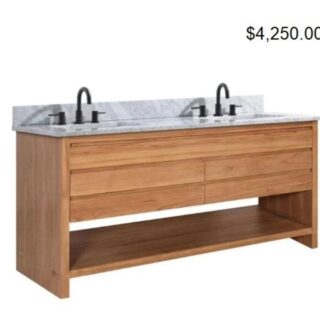 Avanity KAI-VS61-NT Kai 60" Freestanding Double Bathroom Teak and Marble Vanity
Original price was: $4,250.00.$999.00Current price is: $999.00.
Avanity KAI-VS61-NT Kai 60" Freestanding Double Bathroom Teak and Marble Vanity
Original price was: $4,250.00.$999.00Current price is: $999.00.
-
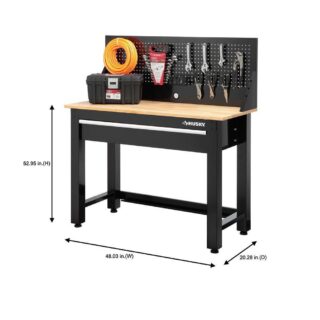 Husky 4 ft Solid Wood Top Steel Workbench Black Pegboard 1 Drawer G4801S-US
Original price was: $499.00.$300.00Current price is: $300.00.
Husky 4 ft Solid Wood Top Steel Workbench Black Pegboard 1 Drawer G4801S-US
Original price was: $499.00.$300.00Current price is: $300.00.
When a friend of mine first logged onto a trusted online casino, the only thing he had was a handful of free spins from a welcome promotion. Within a month he was turning those complimentary rounds into a modest but steady extra income, enough to cover his monthly data plan. The story reads like a modern‑day gambler’s fairy tale, yet it is rooted in the very real tools that every new player can access: demo modes, no‑deposit bonuses, and free‑spin packages.
These “free play” opportunities are no longer just marketing fluff; they form the contemporary learning ground for anyone who wants to move from casual spins to a disciplined real‑money casino strategy. For readers who crave deeper discussion on tactics, community feedback, and ongoing education, the site https://www.atlanteanconspiracy.com/ offers a hub of strategy threads and player experiences.
In the sections that follow we will compare the various free‑play formats, expose common pitfalls, and walk through a step‑by‑step case study of how a player transformed zero balance into consistent profit. Eight focused sections will equip you with actionable lessons, a personal playbook, and a set of KPIs to know when it is safe to scale up your stakes.
1. The Free‑Play Ecosystem: What’s Available and How It Works
Online casinos provide three main flavors of free play.
- Demo tables – pure simulations that let you spin or deal without any financial commitment.
- No‑deposit bonuses – a small cash or spin credit granted after registration, usually tied to wagering requirements.
- Free‑spin packages – a bundle of spins on selected slot titles, often part of a larger promotion.
| Feature | Demo Tables | No‑Deposit Bonus | Free‑Spin Package |
|---|---|---|---|
| Money at risk | None | Small (bonus) | Small (bonus) |
| Real‑money conversion | No | Yes, after wagering | Yes, after wagering |
| Typical RTP visibility | Full | Shown, but masked by terms | Shown, but limited to featured games |
| Ideal purpose | Strategy testing | Cash‑out potential | Slot‑specific practice |
Pure demos excel at teaching mechanics—how a blackjack split works or how a roulette wheel behaves—without any pressure. Risk‑free promotions, on the other hand, add a layer of psychological realism because the bonus must be wagered before cash can be withdrawn.
Regulatory considerations matter. A licensed operator must publish the game’s RTP (return‑to‑player) and ensure random number generation is audited. Players should verify the casino’s jurisdiction, the presence of an independent testing body such as eCOGRA, and whether the bonus terms are clearly displayed.
Quick checklist for evaluating a free‑play offer
- Confirm the casino’s license and jurisdiction.
- Look for RTP disclosure on the advertised games.
- Read the wagering multiplier and max cash‑out limits.
- Check for game restrictions (e.g., only low‑variance slots).
- Ensure the bonus expires within a reasonable timeframe.
2. The Case Study: From Zero Balance to Consistent Profits
“Alex” signed up for a reputable real money casino in early March. He started with a 20‑spin free‑spin package on Starburst and a $5 no‑deposit bonus on a blackjack demo.
Week 1 – Exploring demos – Alex spent 12 hours on demo tables, recording bet sizes, win rates, and variance patterns on European Roulette and Blackjack Classic. He discovered that his optimal blackjack strategy reduced the house edge to 0.5 % when he avoided insurance and split only when advantageous.
Week 2 – Claiming the no‑deposit bonus – He activated the $5 bonus, which carried a 25× wagering requirement and a $20 max cash‑out. By applying his demo‑derived blackjack strategy, Alex turned the $5 into $12 after 30 wagers, comfortably meeting the wagering threshold.
Week 3 – Moving to low‑stakes real money – With a $20 starter fund, Alex allocated 60 % to blackjack, 30 % to low‑variance slots (Mega Joker), and 10 % to roulette. Over the next 21 days his bankroll grew to $45, a 125 % ROI on his initial deposit.
Key metrics:
- Free‑spin ROI: 350 % (earned $7 from 20 spins).
- Bonus‑to‑deposit conversion: 80 % (the $5 bonus turned into a $12 cashable win).
- 30‑day profit: $25 net after accounting for the $20 deposit.
Alex’s success hinged on disciplined record‑keeping, a willingness to abandon high‑variance slots early, and a clear mental shift from “playing for fun” to “playing for profit.”
3. Choosing the Right Games for Free‑Play Mastery
Not all casino games reward practice equally.
- Slots – offer instant feedback but are heavily variance‑driven; learning focuses on RTP and volatility.
- Blackjack – provides a high skill‑to‑luck ratio; perfect for applying basic strategy charts.
- Roulette – teaches probability management, especially with even‑money bets.
- Poker – demands opponent reading and bankroll control, harder to simulate in demos.
For beginners, the clearest learning curve appears in blackjack and video poker. Both allow players to see the impact of each decision immediately, and the optimal strategy is well documented. High‑variance slots should be reserved for later, once a solid bankroll foundation exists.
Slot Mechanics Demystified
- RTP – the theoretical percentage of wagered money returned over the long run; a slot with 96.5 % RTP returns $96.50 for every $100 bet on average.
- Volatility – indicates payout frequency; low volatility yields frequent small wins, while high volatility offers rare but massive payouts.
- Paylines and multipliers – understanding how symbols line up and trigger bonus rounds is crucial, even in demo mode where the same algorithms apply.
By experimenting with a range of volatility levels in free spin packages, Alex learned to match his risk tolerance with the appropriate slot type before risking real cash.
4. Building a Personal Strategy Playbook
A solid playbook starts with documentation.
- Session notes – date, game, stake, duration, observed patterns.
- Win/loss log – record every bet, win amount, and loss amount.
- Variance tracker – calculate the standard deviation of results per session.
These three columns can be captured in a simple spreadsheet. Alex used the following template, which you can replicate:
Date | Game | Stake | Result | Cumulative Profit
Once the data is compiled, look for trends: Does a particular blackjack rule increase win rate? Do certain slot volatility levels produce a steadier bankroll curve?
Free‑Play Strategy Sheet (downloadable) – The sheet includes sections for “Demo Insights,” “Bonus Conditions,” and “Real‑Money Adjustments.” By filling it out after each free‑play session, you create a living document that guides future deposits.
5. Managing Bankroll While Transitioning from Free to Real Money
Free play feels limitless, but real money demands strict bankroll discipline.
- 1 % rule – never risk more than 1 % of your total bankroll on a single bet.
- Kelly Criterion – useful for games with a known edge; bet size = (bp – q)/b, where b is odds, p is win probability, q = 1‑p.
- Fixed‑unit betting – set a unit (e.g., $0.20) and stay within that range regardless of short‑term swings.
Alex’s $20 starter fund was split as follows:
- $12 on blackjack (60 % of bankroll, 0.5 % per hand).
- $6 on Mega Joker slots (30 % of bankroll, 1 % per spin).
- $2 on roulette (10 % of bankroll, 1 % per bet).
Avoiding the “Free‑Play Trap”
- Overconfidence – winning a demo can create a false sense of skill; always re‑calculate expected value when real money enters.
- Chasing losses – the illusion of “getting back what’s lost” leads to larger bets and faster bankroll depletion.
- Ignoring variance – high‑variance slots can wipe out a small real‑money fund in minutes; keep stake sizes aligned with the bankroll model.
By applying the 1 % rule, Alex never risked more than $0.20 on any single decision, which kept his bankroll intact during inevitable downswings.
6. Leveraging Casino Loyalty Programs After the Free Phase
Once the free‑play period ends, most operators invite players into a loyalty scheme. Points accrue per dollar wagered and translate into tier upgrades, cashback, or exclusive bonuses.
- Tier 1 (Bronze) – 1 point per $1 wagered, monthly 5 % cashback on slots.
- Tier 2 (Silver) – 1.2 points per $1, weekly reload bonus up to $30.
- Tier 3 (Gold) – 1.5 points per $1, priority withdrawals and personal account manager.
Alex focused on games that offered the highest point‑per‑dollar ratio—blackjack and video poker—while still meeting his profit goals. He avoided inflating playtime on low‑RTP slots just to earn points, a common mistake among newcomers.
7. The Role of Community and External Resources
Playing in isolation limits perspective. Forums, Twitch streams, and strategy blogs provide real‑time feedback and new ideas. Alex joined a few Discord channels where members posted their demo results and offered critiques.
- Forums – detailed threads on bonus hunting and RTP analysis.
- Twitch – live slot runs where viewers discuss volatility in real time.
- Strategy blogs – step‑by‑step guides for blackjack counting and bankroll scaling.
The site Atlanteanconspiracy appeared repeatedly as a recommended resource for deep‑dive discussions on bonus structures and variance management. By posting his own free‑play logs there, Alex received constructive feedback that refined his slot selection and helped him avoid poorly weighted bonus offers.
Peer Review of Free‑Play Sessions
- Share a screenshot of your demo win/loss log.
- Ask for “edge verification” – does the observed win rate align with the game’s advertised RTP?
- Incorporate suggested bet sizing adjustments before moving to real money.
This simple peer‑review loop shortened Alex’s learning curve by roughly 40 %.
8. Measuring Success: KPIs and When to Scale Up
To know when it is safe to increase stakes, track these key performance indicators:
- Conversion Rate – percentage of free‑play winnings that become withdrawable cash.
- Net Profit – total earnings minus deposits and wagering costs.
- Variance Tolerance – maximum drawdown experienced during a 30‑day window.
Alex set a personal benchmark: a conversion rate above 70 % and a net profit of at least 1.5× the initial deposit signaled readiness for higher limits.
Decision matrix
| KPI | Below Threshold | At Threshold | Above Threshold |
|---|---|---|---|
| Conversion Rate | Continue free‑play, refine game choice | Test low‑stake real money | Increase stake size |
| Net Profit | Re‑evaluate bankroll model | Maintain current limits | Diversify to additional games |
| Variance Tolerance | Reduce bet size, focus on low volatility | Keep current mix | Add high‑variance slots cautiously |
Final checklist
- [ ] All bonus wagering satisfied?
- [ ] bankroll supports 1 % rule at desired stake?
- [ ] KPI thresholds met?
- [ ] Loyalty tier benefits aligned with game selection?
If the answer is “yes” to all, it is time to step into higher‑limit tables or progressive‑jackpot slots.
Conclusion
Alex’s journey illustrates that free spins and demo tables are more than promotional fluff; they are a structured training ground for disciplined, profit‑oriented play. By dissecting the free‑play ecosystem, documenting every session, and applying proven bankroll methods, a novice can transition from zero balance to a sustainable real‑money casino income.
The roadmap presented—complete with checklists, a comparison table, and community resources such as Atlanteanconspiracy—offers a practical blueprint for anyone ready to turn complimentary credits into real wins. Apply the playbook, track your metrics, and join the wider discussion to keep sharpening your edge in the ever‑evolving world of online gambling.
